All Courses

A comprehensive, interactive programme across the perinatal continuum — combining Fetal Monitoring and Maternity Crisis Management for midwives and doctors. It builds detailed understanding of fetal surveillance and the structured response to obstetric emergencies, anchored to RANZCOG guidance.
Stream 1 · Fetal Monitoring
- Fetal physiology
- Antenatal CTG
- Intrapartum cardiotocography
- CTG simulation lab (interactive cases)
- Cord blood gas
- Errors & limitations in fetal monitoring
- Intrapartum intermittent auscultation
Stream 2 · Maternity Crisis Management
- Shoulder dystocia
- Breech
- Postpartum haemorrhage
- Maternal collapse
- Pre-eclampsia & eclampsia
- Uterine rupture
- Cord presentation & prolapse
- Antepartum haemorrhage

Medication Administration for Enrolled Nurses
A fully self-directed, entirely online professional development programme. 8.5 CPD hours. Eleven modules. Written for enrolled nurses in every setting - and for the registered nurses who supervise them, and the managers and educators who have to verify their scope.
The sentence the whole programme rests on
You work under the supervision of a registered nurse. You keep responsibility for your own actions. Both are true at once, and the NMBA states them in the same breath - supervision is a requirement placed on the work, not a transfer of accountability.
Which is why 'I was told to' and 'the RN checked it' are not defences, and why the practical rule at the centre of this course is six words long: if it is not right, you do not give it.
Two things to settle before you enrol
- This is not the high-risk medicines course. OBA's High-Risk Medicines: the APINCHS Classification is about which medicines carry disproportionate risk, organised by class. This course is about the act of administration and the scope of one role. The two sit on different actions of the same standard - that course on NSQHS Action 4.15, this one on Action 4.04
- This is not a medicines reference. There is no dose, no strength, no rate, no frequency and no drug-specific clinical information anywhere in it, and there is not going to be. The chart is the order; the Australian Medicines Handbook, the product information and your pharmacist are the references. This is about the process around them
Four layers, and three of them are not on the register
Authority to administer comes from four things at once: your registration and any notation on it, your education and demonstrated competence, your employer's authorisation, and your state or territory's drugs and poisons legislation.
An enrolled nurse may administer medicines unless there is a notation - the notation is the exception, not the rule, and it is removed only by completing the medicines unit within an NMBA-approved Diploma of Nursing and applying to the Board. And intravenous medicines administration requires separate education which is not published on the national register, so no register search can answer it in either direction. That verification is the employer's, under Action 4.04.
What you will be able to do
- State the NMBA position on enrolled nurses and medicines in its own terms - supervision and retained responsibility, together
- Name the four layers of your authority and say where each one is found, including the one nobody can look up
- State what a notation is, what removes it, and what does not
- Explain why the rights of administration are necessary and not sufficient - most errors pass every one of them
- Treat the chart as the order, and identify the chart faults that stop an administration
- Explain what makes a second check independent, and what a check does and does not catch
- Apply 'if it is not right, you do not give it' under pressure from a senior colleague - and complete the escalation and the documentation that must follow it
- Name the documented causes of medication error, and explain why none of them is carelessness
- Document an administration, an omission and a refusal so the record is usable by the next clinician
- Respond to refusal, swallowing difficulty and a PRN request within the EN role
- State what happens after an error, in order - and why concealment is the error that compounds
What is deliberately not in it
- No dose, strength, rate, frequency or concentration for any medicine. You have a chart in front of you, a medicines reference on the ward and a pharmacist on the phone. A number half-remembered from a slide competes with all three and competes badly
- No drug-specific clinical information, and nothing about whether a named medicine may be crushed, opened or altered. That is a pharmacist's determination, made per formulation, and the answer can differ between products containing the same medicine
- No Schedule 8 storage, witnessing, register or discrepancy requirement stated as national, and no rule on verbal or telephone orders or on second checking stated as though it applied everywhere. All of those differ between states, territories and services - a national version would be wrong for most readers and would sound authoritative while being wrong
- No injection, infusion or intravenous technique taught as instruction. Technique is taught practically, supervised, and assessed against a competency. A slide deck cannot credential it and must not appear to
The ten questions you will finish with
This course names the things it will not answer for you, because they are set where you work: whether you have a notation, whether your IV education has ever been verified, whether your scope has ever been defined in writing, which medicines need a second check here, who may be a checker, what your policy says about verbal orders, what you do with a Schedule 8 discrepancy tonight, and three more. The workbook has a page for the actual answers - a number, a name, a form, not 'the escalation process'.
A note on who is taking this course
Some of the people doing this have made a medication error, and some are in a process about one right now. So the programme says plainly that none of the documented causes of medication error is a person being careless, and that the distress after an error is usually out of all proportion to the harm caused. Neither of those is a reassurance written to be kind - they are both findings, and a learner who believes this subject is about blame will not report the next thing.
Support lines appear on every module and in every student document: Nurse & Midwife Support 1800 667 877, free and confidential and answered 24 hours; Lifeline 13 11 14. You may stop at any point and come back - nothing is timed and there is no penalty.
Who it is for
- Enrolled nurses administering medicines in any setting - the cohort this was written for, and the one most often given RN-oriented medication training and left to translate it
- ENs moving between acute, aged care, disability and community, where the authority to administer is the same and almost everything around it changes
- ENs who hold a notation, who need to know precisely what it means and exactly what removes it - this cohort is given wrong information more often than any other
- Diploma of Nursing students approaching HLTENN040, and new graduate ENs in their first year
- Registered nurses who supervise enrolled nurses, and who are frequently unclear about what direct and indirect supervision actually require of them
- Nurse unit managers, educators and aged care clinical leads responsible for verifying scope under Action 4.04 - including the part of it that is not on the register
- Internationally qualified nurses working as ENs, for whom the notation system, the state and territory drugs and poisons framework and the EN-RN relationship are usually entirely new
How you learn
Watch the narrated module video, read the student learner guide, complete the reflective workbook activity, then complete the knowledge check and read every rationale - including on the items you answered correctly. There are no scheduled classes, no live sessions, no clinical placement, and no time limit on anything.
What is included
- Eleven module slide decks and eleven student learner guides
- Eleven knowledge checks with a rationale on every option, right and wrong
- A case study assessment - five unfolding situations across 25 branching decisions
- A 60-item summative assessment blueprinted across all eleven modules, 80 per cent to pass, with 20 mandatory-correct items
- A fillable reflective workbook - your CPD evidence, which the NMBA expects you to hold
- Five optional interactive practice tools: can I give this, stop or go, what went wrong here, write the entry, and a scope of practice self-check
- Three fillable workplace instruments: a scope of practice self-audit, a medication round walk-through, and a near-miss and error review
- A one-page scope of practice card, and a directory of Australian organisations
A note on the CPD figure
8.5 hours, and it is measured rather than asserted: narration at 135 words per minute, reading at 130, knowledge checks timed to include every rationale, and the assessments timed as measured reading plus a stated decision allowance. The measured total is 8.65 hours, which is 8.5 to the nearest half hour - rounded down rather than up. It has not been padded to reach a rounder number, because the whole point of deriving the figure is that it is not chosen.
Sources, retrieved 19/09/2026. Enrolled nurse scope and the notation: NMBA Fact sheet - Enrolled nurses and medicines administration, version 3.1 approved July 2023, next review due May 2027. Supervision and retained responsibility: NMBA Fact sheet - Enrolled nurse standards for practice, version 3.0 approved March 2023 (its stated next review date of February 2025 has passed; it remains the current published fact sheet), and the NMBA Enrolled nurse standards for practice, commenced January 2016. Medication safety: NSQHS Standards second edition - Medication Safety Standard, 15 actions across four criteria, in particular Actions 4.04, 4.09 and 4.14. Charts: ACSQHC National Inpatient Medication Chart family. Not stated in this course, because they belong to a prescriber, a pharmacist, a legislature or your workplace: any dose, strength, rate or frequency; any drug-specific clinical information; whether a named medicine may be altered; your jurisdiction's Schedule 8 and verbal order requirements; and your service's second-checking policy. Review due 19/09/2027.


High-Risk Medicines: the APINCHS Classification
A fully self-directed, entirely online professional development programme for nurses, doctors who prescribe, internationally qualified nurses and internationally trained doctors, and student nurses. 10.5 CPD hours.
Course code | OBA-HRM-2026 |
Provider | OBA Nursing Academy |
Duration | 10.5 CPD hours, self-paced |
Delivery | Entirely online and entirely self-directed, through the OBA learning management system. No classes, no attendance, no placement. |
Modules | 11, plus a case study assessment and a summative assessment |
Assessment | 60 single-best-answer items, 80% pass mark, 2 attempts |
Entry requirements | None. Content is written for a mixed clinical audience and identifies which sections apply to each role. |
Outcome | Certificate of completion with a unique certificate identifier |
Version | 1.0, issued 18/09/2026, review due 18/09/2027 |
What this programme is about
High-risk medicines are medicines with an increased risk of causing significant patient harm or death if misused or used in error. Mistakes with them are not especially frequent — but when they happen, the consequences are much worse. This programme is built around the APINCHS classification published by the Australian Commission on Safety and Quality in Health Care: antimicrobials, potassium and other electrolytes, insulin, narcotics and other sedatives, chemotherapeutic agents, heparin and other anticoagulants, and systems.
Who should enrol
Registered and enrolled nurses in acute, subacute, aged, community and peri-operative settings · medical practitioners who prescribe, from interns to consultants and general practitioners · internationally qualified nurses and internationally trained doctors preparing for Australian practice · student nurses and student enrolled nurses. Nurses and prescribers are taught together deliberately, because most of what goes wrong with a high-risk medicine goes wrong in the space between them.
What you will cover
00 Orientation · 01 Why high-risk medicines are different · 02 The APINCHS classification · 03 A – Antimicrobials · 04 P – Potassium and other electrolytes · 05 I – Insulin · 06 N – Narcotics (opioids) and other sedatives · 07 C – Chemotherapeutic agents · 08 H – Heparin and other anticoagulants · 09 S – Systems · 10 Scope, law, reporting and human factors
How you will learn
Watch the narrated module video · read the Student Learner Guide · complete the reflective workbook activity · complete the knowledge check and read every rationale · move to the next module. Four optional interactive practice tools are included: an APINCHS classifier drill, an error-prone order rewriter, an independent double check simulator and a scope of practice self-check.
What this course is, and is not
|
SCOPE OF PRACTICE AND DOSING • This programme is professional development. It is not a qualification, it is not a unit of competency, and it does not of itself authorise any learner to prescribe, dispense, prepare, check or administer any medicine. Every activity described is performed only within the learner's own scope of practice, after assessment of competence, and in line with the policy of the organisation they work for. Where an organisation's policy is more restrictive than this course, the organisation's policy applies. • This course gives no dosing guidance. It names medicines, because the classification does. Every dose, concentration, diluent, rate and monitoring interval must be taken from the current prescription, the Australian Injectable Drugs Handbook, Therapeutic Guidelines, the approved product information or local policy — never from a course, and never from memory. • Four things are set locally rather than nationally and this course will not answer them for you: your organisation's high-risk medicines list, whether ward dilution of concentrated electrolytes is permitted where you work, who may act as a second checker, and the poisons and controlled substances law of your state or territory. • Currency: written against the ACSQHC APINCHS classification (page last updated 30/04/2026), the ACSQHC Recommendations for safe use of medicines terminology (November 2024), the NSQHS Standards (2nd edition) Medication Safety Standard, and the NMBA standards and enrolled nurse medicines fact sheet as published at 18/09/2026. |
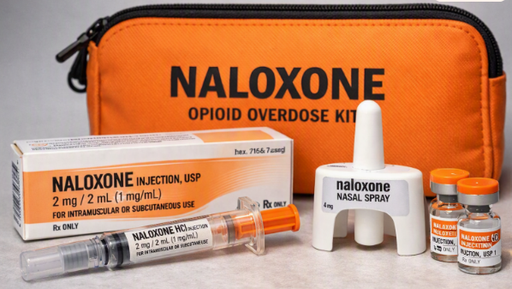
Opioid Safety and Naloxone
A fully self-directed, entirely online professional development programme. 7.5 CPD hours. Eleven modules. For registered and enrolled nurses, nurse practitioners and midwives in every setting where an opioid is given - and for the managers and educators who own the observation chart, the escalation trigger and the naloxone protocol.
The line this course holds
In any patient given an opioid, oversedation should be considered to indicate OIVI until proven otherwise - regardless of respiratory rate or oxygen saturation.
Opioid-induced ventilatory impairment has three components: central respiratory depression, sedation, and upper airway obstruction. Only one of them can be assessed at the bedside by anybody, with no equipment, in about ten seconds - and it is the one that correlates best with arterial carbon dioxide.
Why the observations mislead
Respiratory rate is a very unreliable measure: some patients maintain a rate within acceptable limits even in the presence of SEVERE OIVI, and a rate counts breaths without measuring depth. Oxygen saturation may remain acceptable while arterial carbon dioxide rises, because it is an oxygenation measure rather than a ventilation measure - and supplemental oxygen makes it weaker still.
Which settles what this course is about: assess the sedation, every time, in every patient given an opioid - and act on a score of 2, which is early OIVI.
One set of numbers in, every other number out
- The sedation score is carried exactly as published. 0 wide awake, 1 easy to rouse, 2 easy to rouse but unable to remain awake, 3 difficult to rouse - and the aim is always less than 2. Using a different scale is itself the hazard, which is why a scale containing 'S' for normally asleep is recommended against
- And there is no opioid dose, no conversion value and no naloxone regimen anywhere in it. Those belong to a prescriber, a pharmacist and your service's locally approved protocol. Completing this course authorises nothing beyond your existing scope
What you will be able to do
- State the governing principle, and name the three components of OIVI
- Use the sedation score 0 to 3 correctly, and explain why 2 is the trigger rather than 3
- Explain why a scale containing an S should not be used, and why AVPU cannot do this job
- State when a sedation score is taken, including at the expected peak effect, and why it is monitored AND documented
- Explain why respiratory rate and oxygen saturation mislead, and what the commonly taught thresholds are worth
- State why all patients given an opioid must be assumed to be at risk
- Identify the named modifiable risks, including inadequate nursing assessments or responses and chasing pain scores
- Withhold, rouse and escalate at a sedation score of 2 - and give a smaller dose if more analgesia is needed, regardless of pain score
- Describe what naloxone does and does not do, and why re-sedation is the expected risk
- Conduct the take home naloxone and discharge conversation the standard requires
Sources, retrieved 19/09/2026. Stewardship: ACSQHC Opioid Analgesic Stewardship in Acute Pain Clinical Care Standard, 2022 - nine quality statements, of which quality statement 6 is the nurse's, with indicator 6a measuring a system rather than a nurse. Sedation score and the OIVI statement: ANZCA and FPM PS41(G) Acute pain management, 2023, Appendix 1 - the stand-alone OIVI statement has been INCORPORATED INTO PS41(G), which is why it cannot be found separately. Take home naloxone: the Australian Government Take Home Naloxone program, national and free without prescription since 1 July 2022; naloxone has been a Pharmacist Only medicine for the treatment of opioid overdose since 2016. Regulatory reform: Therapeutic Goods Administration prescription opioid reforms. NOT stated in this course, because they belong to a prescriber, a pharmacist, a local protocol or a state: any opioid dose, strength, frequency, infusion rate or duration; any equianalgesic or conversion value; any naloxone dose, interval or titration regimen; any opioid tapering regimen; and any Schedule 8 storage, register or witnessing requirement. Review due 19/09/2027.

Trauma-Informed Care: Practice, Not Therapy
A fully self-directed, entirely online professional development programme. 8.5 CPD hours. Eleven modules. For nurses and midwives in every setting, assistants in nursing, personal care and disability support workers, mental health and alcohol and other drug workers, aged care staff, students on placement, and educators and managers.
Two things to settle before you enrol
- This is not Trauma Nursing. OBA's Trauma Nursing Fundamentals is about physical injury - haemorrhage, the primary survey, the first hour after a crash. It shares a word with this course and nothing else
- This is not trauma therapy. This course does not teach you to treat trauma and is not intended to. Trauma-specific treatment is delivered by clinicians trained and supervised in those modalities, over time, with consent
The line this course holds
Trauma-informed care is not treatment for trauma. It is how you deliver ordinary care so that it does not re-traumatise.
That is Blue Knot Foundation's distinction, in their own words: trauma-informed practice rests on awareness of the impacts of trauma AS DISTINCT FROM DIRECTLY TREATING IT. And there is a corollary that most training on this subject gets backwards: you do not need to know what happened. The framework changes how care is delivered to everybody precisely because you cannot know who has a history - so nothing in this programme asks you to take a trauma history, screen for one, or ask anybody what happened to them.
Why universal rather than targeted
The Australian Child Maltreatment Study surveyed 8,503 people and found that 62.2 per cent of Australians experienced at least one type of child maltreatment. There is no small group to target. In any group of patients, residents or clients, a majority have a history - and you are not going to know which.
What you will be able to do
- State the distinction between trauma-informed practice and trauma-specific treatment, and explain why the framework requires no history
- Name the five principles, and describe what each looks like in a real clinical interaction
- Explain why HOW care is provided matters as much as what is provided
- Name the eight mechanisms of re-traumatisation, and apply one change to a routine task that removes most of the risk without adding time
- Recognise withdrawal as distress, not only agitation - and know which one gets missed
- Respond to a disclosure without asking a single question about the event, and decide what to record
- Explain why restrictive practice is the intervention most likely to re-traumatise, and identify seclusion where the door is not locked
- State the National Scheme definition of cultural safety, and who determines it
- Know what you must look up about mandatory reporting in your own jurisdiction
- Distinguish vicarious trauma from burnout, and know why the distinction changes what helps
What is deliberately not in it
- No instruction to ask anybody what happened to them. 'What happened to you' is a way of thinking about behaviour, not a question to put to a patient - and a clinician who leaves a course doing that has been made more dangerous, not less
- No therapy modality, protocol or technique, and no diagnostic criteria. Both belong to trained, supervised clinicians and to the Australian Guidelines for the Prevention and Treatment of Acute Stress Disorder, PTSD and Complex PTSD, which this course names as the destination and does not reproduce
- No screening tool, item or cut-off. A tool with no pathway behind it generates disclosures nobody can respond to
- No mandatory reporting threshold or mechanism, and no restrictive practice authorisation pathway. All of those differ between states and territories, and a national version would be wrong for most readers
A note on the content, and on who is taking this course
Given that prevalence figure, a large proportion of the people doing this course are survivors themselves. So it is built to the standard it teaches. It carries no graphic or detailed account of abuse, assault or violence anywhere - not in a case study, not in an assessment item, not on a slide. Where a case needs a history it is named in a clause and not described, and nothing is included for effect.
Support lines appear on every module and in every student document: Blue Knot Helpline 1300 657 380, 1800RESPECT 1800 737 732, 13YARN 13 92 76, Nurse & Midwife Support 1800 667 877, Lifeline 13 11 14. You may stop at any point and come back - nothing is timed and there is no penalty.
Who it is for
- Nurses who have done trauma-informed care training before - and who may have been taught to ask patients about their histories. Module 03 is the correction, and it is the most important module in the programme
- Assistants in nursing, personal care and disability support workers, who deliver the most intimate care, receive the most disclosures, and are written for least. Modules 04 and 09 are about their work specifically
- Midwives and maternity staff - birth trauma is one of the most consequential and least discussed forms of iatrogenic trauma in Australian health care
- Mental health, AOD and aged care staff, where the framework is oldest and the gap between the policy and the ward is often widest
- Internationally qualified nurses, for whom cultural safety, regulated restrictive practices and Australian mandatory reporting are usually entirely new
- Educators, clinical leads and managers responsible for making a service trauma-informed rather than for saying that it is
How you learn
Watch the narrated module video, read the student learner guide, complete the reflective workbook activity, then complete the knowledge check and read every rationale - including on the items you answered correctly. There are no scheduled classes, no live sessions and no clinical placement, and no time limit on anything.
What is included
- Eleven module slide decks and eleven student learner guides
- Eleven knowledge checks with a rationale on every option, right and wrong
- A case study assessment - five unfolding situations across 25 branching decisions
- A 60-item summative assessment, blueprinted across all eleven modules, 80 per cent to pass
- A fillable reflective workbook - your CPD evidence, which the NMBA expects you to hold
- Five optional interactive practice tools: which principle is missing, say it differently, practice or re-traumatisation, before the restraint, and a scope of practice self-check
- Three fillable workplace instruments: an environment and practice walk-through, a re-traumatisation review, and a team conversation guide
- A one-page scope of practice card, and a directory of Australian organisations
A note on the CPD figure
8.5 hours, and it is measured rather than asserted: narration at 135 words per minute, reading at 130, knowledge checks timed to include every rationale, and the assessments timed as measured reading plus a stated decision allowance. The measured total is 8.68 hours, which is 8.5 to the nearest half hour. This is a shorter programme than most in the OBA series, and that is a property of the subject rather than a defect in the course - it carries very few thresholds and figures, because there are very few to carry. It has not been padded to reach a rounder number.
Sources, retrieved 19/09/2026. Trauma-informed practice and the five principles: Blue Knot Foundation, Trauma-Informed Practice fact sheet for workers, DEC 23 Version 1, and the Blue Knot Practice Guidelines. Treatment of trauma: Australian Guidelines for the Prevention and Treatment of Acute Stress Disorder, PTSD and Complex PTSD - NHMRC-approved living guidelines, approved 23 June 2020 with updated recommendations approved 22 December 2021. Prevalence: Australian Child Maltreatment Study, 2023. Restrictive practice: NSQHS Comprehensive Care Standard (2nd ed), Actions 5.35 and 5.36; NDIS Quality and Safeguards Commission. Cultural safety: Ahpra and National Boards shared Code of conduct, June 2022. Review due 19/09/2027.

Trauma Nursing Fundamentals: Recognition, Resuscitation and the First Hour
A fully self-directed, entirely online professional development programme. 10.0 CPD hours. Eleven modules. For emergency department nurses, rural and remote nurses, ward, theatre, recovery and critical care nurses who receive trauma patients, internationally qualified nurses, enrolled nurses and students, and educators preparing a service for trauma reception.
The line this course holds
The nurse's numbers are in. The prescriber's numbers are out.
Every textbook on this subject was written for a doctor. This one was written for a nurse. Everything you monitor, recognise, report and escalate is stated exactly, with the clause it came from - the eight critical derangement values from the national critical bleeding guideline, the transfusion ratio floor, the tranexamic acid time window, the GCS thresholds that change what happens, the tourniquet application point.
No medicine dose, rate or regimen appears anywhere in the programme. No blood product dosing. No weight-based calculation. No age-specific paediatric vital sign range. That is not squeamishness - it is a safety decision, because a dose you half-remember from a course competes with the prescription in front of you, and a course is very good at making people feel confident. The same line runs through the procedures: thoracostomy, intubation and thoracotomy appear so you can anticipate them, prepare for them and assist. Never as instruction.
What this course is not
- It is not EMST, ATLS, ITLS or TNCC. Those are separate proprietary courses with their own providers, faculty, practical assessment and currency requirements. This is CPD. If your employer requires one of those, this does not satisfy it
- It is not Trauma-Informed Care. That is a different OBA course about PSYCHOLOGICAL trauma. It shares a word with this course and nothing else - so if that is what you are looking for, this is not it
- It does not place anybody in a trauma team. That is a service-level decision - training for the role, credentialling for its procedures, and rostering
- It is not your service's protocols. Your major haemorrhage protocol, trauma call criteria and spinal clearance pathway are local, and the course sends you to find yours
What you will be able to do
- Work through <C>ABCDE in order, and explain why catastrophic haemorrhage precedes the airway and why airway management takes precedence over spinal motion restriction
- Apply the rule that deterioration returns you to the START of the primary survey
- Apply ANZCOR's sequence for controlling bleeding, and state why the tourniquet application time must be recorded and communicated
- Recognise compensated shock, and explain why a normal blood pressure does not exclude significant haemorrhage
- State the eight parameters the national critical bleeding guideline requires to be measured early and frequently, and the 2:1:1 transfusion ratio floor
- Describe the lethal triad and the nursing actions that interrupt it
- Distinguish primary from secondary brain injury, and name the two causes that carry the most weight
- State ANZCOR's current position on cervical collars and the harms the guideline names
- Recognise the chest injuries that kill in minutes, and the reversible causes in traumatic cardiac arrest
- Describe the tertiary survey, what gets missed and in whom, and what must be documented
Who it is for
- ED nurses new to a trauma-receiving department - the cohort this was written for
- Rural, regional and remote nurses, where the trauma patient arrives before the team does and the nurse is frequently the most experienced clinician in the room
- Ward, theatre, recovery and critical care nurses who receive trauma patients after the resuscitation room - and who are the people most likely to find the injury nobody noticed
- Internationally qualified nurses, for whom the Australian trauma system is usually entirely new, and for whom some of what was taught overseas has since been superseded here
- Enrolled nurses, students and assistants, frequently the second pair of hands in a trauma resuscitation
- Educators and clinical nurse specialists preparing a service or a cohort for trauma reception
How you learn
Watch the narrated module video, read the student learner guide, complete the reflective workbook activity, then complete the knowledge check and read every rationale - including on the items you answered correctly. There are no scheduled classes, no live sessions and no clinical placement.
What is included
- Eleven module slide decks and eleven student learner guides
- Eleven knowledge checks with a rationale on every option, right and wrong
- A case study assessment - five unfolding presentations across 25 branching decisions
- A 60-item summative assessment, blueprinted across all eleven modules, 80 per cent to pass
- A fillable reflective workbook - your CPD evidence, which the NMBA expects you to hold
- Five optional interactive practice tools: the primary survey sequencer, where is the blood going, handover under pressure, the collar question and a scope of practice self-check
- Three fillable workplace instruments: a trauma reception readiness check, a documentation and handover audit, and a tertiary survey record
- A one-page scope of practice card, and a directory of Australian organisations
What is local, and deliberately not here
Any medicine dose, rate, regimen or blood product dosing; age-specific paediatric vital sign ranges and weight-estimation formulae; your jurisdiction's trauma destination, bypass and transfer criteria; your service's major haemorrhage protocol, trauma call activation criteria and spinal clearance pathway; and who 'the retrieval service' is at three in the morning. Every one of those has an authority, and it is not this course.
Sources, retrieved 19/09/2026. Critical bleeding: National Blood Authority, Patient blood management guideline for adults with critical bleeding, VERSION 2.0 published 4 SEPTEMBER 2025 and under review - note that PBM Modules 2 to 6 have been ARCHIVED and must not be cited as current. Spinal: ANZCOR Guideline 9.1.6, APPROVED APRIL 2026, superseding the 2016 edition. Bleeding: ANZCOR Guideline 9.1.1. Traumatic cardiac arrest: ANZCOR Guideline 11.10. Deterioration: NSQHS Recognising and Responding to Acute Deterioration Standard, all thirteen actions. Review due 19/09/2027.

Triage Principles: the Australasian Triage Scale in Practice
A fully self-directed, entirely online professional development programme. 10.0 CPD hours. Eleven modules. For nurses working towards or newly appointed to a triage role, emergency department nurses who are not yet triage-trained, internationally qualified nurses, medical officers rotating through emergency, and educators and quality staff who audit triage.
What this course is, and what it is not
Completing this course does not qualify anyone to triage. That is not a disclaimer; it is the first thing the course teaches. ACEM's G24 requires triage to be performed by staff who are both specifically trained AND experienced, and names the Emergency Triage Education Kit as the nationally recognised educational resource. This programme is the theory that sits underneath ETEK, departmental orientation and supervised practice. It is one layer of one of those two conditions.
What it does is teach the guideline properly - all five categories with their descriptors, the rules that govern allocation, the conventions for children, older people, pregnancy and behavioural disturbance, the re-triage and escalation obligations, and what a triage record has to contain. Most triage teaching is a category table and a shift alongside somebody experienced. This is the document that table came from.
What you will be able to do
- State the five categories with their maximum treatment acuity times and performance indicator thresholds, without reference material
- Apply the allocation rule - the most urgent clinical feature identified determines the category - and explain why absolute physiological measurements must not be the sole criterion
- Work through a systematic assessment, including the environmental check that comes before the patient and the stop rule that overrides the sequence
- Recognise the high-risk history routes into Category 2 in a patient who looks entirely well
- Cite the descriptor that decides a borderline Category 3, 4 or 5 - by its words
- Apply the humane practice clauses for pain, including for a patient who cannot self-report
- Apply the combined-presentation rule, and place a departmental mental health tool correctly in relation to the ATS category
- State both re-triage triggers, what must be documented, and who must be notified immediately when a waiting patient deteriorates
- Audit triage allocation against the published descriptors, and identify category drift from a department's own data
Who it is for
- Nurses working towards or newly appointed to a triage role - the cohort this was written for. This is the theory; ETEK, orientation and supervised practice are the rest
- ED nurses who are not triage-trained, who work inside the scale every shift without having been taught it - and whose recognition of a re-triage trigger is one of the safest things a waiting room has
- Internationally qualified nurses, for whom the ATS is usually entirely new. It is not the Manchester system many will have trained on, and the differences matter
- Medical officers and rotating junior doctors, who are governed by the categories without having been taught them
- Educators, quality and clinical governance staff, for the drift and audit content - and the triage audit tool
- Rural, remote and single-nurse settings, where the assessment translates even though the assumption of a separate triage clinician does not
How you learn
Watch the narrated module video, read the student learner guide, complete the reflective workbook activity, then complete the knowledge check and read every rationale - including on the items you answered correctly. There are no scheduled classes, no live sessions and no clinical placement.
What is included
- Eleven module slide decks and eleven student learner guides
- Eleven knowledge checks with a rationale on every option, right and wrong
- A case study assessment - five unfolding presentations across 25 branching decisions
- A 60-item summative assessment, blueprinted across all eleven modules, 80 per cent to pass
- A fillable reflective workbook - your CPD evidence, which the NMBA expects you to hold
- Five optional interactive practice tools: a category allocator, a red flag spotter, pressure at the desk, a mental health triage drill and a scope of practice self-check
- Three fillable workplace instruments: a triage audit tool, a waiting room round record, and a triage competency and orientation record
- A one-page scope of practice card, and a directory of Australasian organisations
What this course does not do
It does not qualify, credential or authorise anyone to triage. Authorisation is a departmental determination made by somebody with the authority to make it, recorded on the competency and orientation record included here - and it is not made by OBA Nursing Academy.
Some answers are local and this course deliberately does not give them: age-specific paediatric vital sign thresholds, which come from your own department's observation charts; analgesia and any other medicine, dose, route or rate, which come from local guidelines and prescribing references; who 'the senior medical officer in charge or their delegate' is at three in the morning, which is a name you have to go and find; your department's streaming criteria and escalation pathway; and your jurisdiction's mental health legislation. A single national figure printed here would be wrong somewhere.
What the course DOES state exactly are the published national specifics - the treatment acuity times, the performance indicator thresholds and the category descriptors - each quoted from its source clause.
Category descriptors, times, thresholds and the allocation rules are quoted from ACEM's Guidelines on the Implementation of the Australasian Triage Scale in Emergency Departments (G24, V6 November 2023) and Policy on the Australasian Triage Scale (P06, V5 November 2023), retrieved 19/09/2026. Note that both are served from URLs carrying earlier dates - check each document's own title page. The systematic approach is from the Emergency Triage Education Kit. Review due 19/09/2027.

Infection Prevention and Control: the ACSQHC Standards
A fully self-directed, entirely online professional development programme. 10.0 CPD hours. Eleven modules. For infection prevention practitioners and portfolio holders, nurse unit managers, educators, quality and clinical governance staff, medical and procedural clinicians, internationally qualified nurses, and anyone preparing a service for accreditation.
What kind of course this is
Most infection prevention training teaches practice: wash your hands like this, wear this, remove it in this order. This one teaches the architecture - the Preventing and Controlling Infections Standard, all nineteen actions of it, what each requires and what an organisation has to be able to show.
The difference matters most when something is wrong. A clinician who knows only practice can notice that the hand rub dispenser is at the door instead of the bedside, and be annoyed about it. A clinician who knows the system can name it as an engineering control, get it onto the risk register through the route Action 3.01 requires to exist, and point at Action 3.02's clause about access to equipment. The second clinician is far more likely to get a dispenser.
What you will be able to do
- Name the three criteria, thirteen items and nineteen actions, and locate any action by subject
- Read an action, separate its limbs, and say what would evidence each one - the single most useful skill in accreditation preparation
- Apply the hierarchy of controls, and explain why an improvement plan made only of education is a weak plan
- Read a surveillance figure critically - numerator, denominator, period, ascertainment and comparability
- Apply the system layer of precautions: risk assessment and re-assessment, placement, the documented harms of isolation, and what must be communicated
- Distinguish training completion from assessed competence, and explain why an unassessed assessor breaks two actions
- Explain what a reprocessing traceability process must identify, and why that makes a recall possible
- Describe what the Standard requires of workforce immunisation, exclusion, movement, support and outbreak management
- Name the eight quality statements of the Antimicrobial Stewardship Clinical Care Standard, and the six with a direct nursing contribution
- Complete a gap analysis against all nineteen actions, and propose a control that is not education
Who it is for
- New IPC practitioners and portfolio holders - the cohort this was written for. Knowing how to wash your hands does not tell you what to do on Monday
- Nurse unit managers, educators, quality and clinical governance staff who have to produce evidence rather than only comply
- Medical and procedural clinicians, particularly for the invasive device and antimicrobial stewardship layers
- Internationally qualified nurses, for whom the Australian accreditation apparatus is usually entirely new however experienced the clinician
- Aged care, disability, primary care and day procedure staff, whose obligations come from a different instrument but whose content is largely the same
- Student nurses, who meet the Standard as a list to memorise and almost never as a system
How you learn
Watch the narrated module video, read the student learner guide, complete the reflective workbook activity, then complete the knowledge check and read every rationale - including on the items you answered correctly. There are no scheduled classes, no live sessions and no clinical placement.
What is included
- Eleven module slide decks and eleven student learner guides
- Eleven knowledge checks with a rationale on every option, right and wrong
- A case study assessment - five unfolding scenarios across 25 branching decisions
- A 60-item summative assessment, blueprinted across all eleven modules, 80 per cent to pass
- A fillable reflective workbook - your CPD evidence, which the NMBA expects you to hold
- Five optional interactive practice tools: an action finder, a hierarchy of controls sorter, evidence or intention, a surveillance reader and a scope of practice self-check
- Three fillable workplace instruments: a gap analysis against all nineteen actions, an outbreak readiness check, and an evidence portfolio index
- A one-page scope of practice card, and a directory of Australian organisations
How this relates to the two practice courses
OBA publishes three programmes in this area and they do not overlap. This is the system course - all nineteen actions. Hand Hygiene & PPE (OBA-HHP-2026) teaches the practice behind Actions 3.06 to 3.10: the 5 Moments, product selection, gloves, gowns, eye protection, respirators, fit testing and doffing. Aseptic Technique (OBA-AT-2026) teaches the practice behind Action 3.11: key parts and key sites, aseptic fields, the national procedure sequences and breach management.
Module 05 here covers those two actions as PROGRAMMES - what the organisation must have, audit and act on - and sends you to the practice courses for the technique. If you deliver direct care, the practice courses change your week more than this one will. If you hold a portfolio, prepare for accreditation, write policy or manage a unit, this is the one that changes what you can evidence.
What this course is, and is not
This programme is professional development. It is not a qualification, and it does not make an organisation compliant - the Standard binds the organisation and is assessed by accreditation assessors against evidence the organisation produces. A certificate is not evidence of a system. It does not qualify anyone as an infection prevention and control practitioner, does not credential a hand hygiene auditor, and does not make anyone an accreditation assessor.
Some answers are jurisdictional and this course deliberately does not give them: workforce immunisation requirements, exclusion periods, cleaning product dilutions and contact times, surveillance definitions and notification thresholds, and antimicrobial doses, durations and agent choices. For each, the course names the action that requires it and points at the authority - your health department, your public health unit, the product's instructions for use, or Therapeutic Guidelines. A single national figure printed here would be wrong somewhere.
Action numbers, wording and criteria structure are quoted from the Preventing and Controlling Infections Standard as published by the Commission and retrieved 19/09/2026. The Antimicrobial Stewardship Clinical Care Standard was published in 2020. The Australian Guidelines for the Prevention and Control of Infection in Healthcare remain the 2019 edition, despite the URL they are served from. Review due 19/09/2027.

Hand Hygiene and Personal Protective Equipment
A fully self-directed, entirely online professional development programme. 10.0 CPD hours. Eleven modules. For registered and enrolled nurses, medical and procedural clinicians, internationally qualified nurses, student nurses, assistants in nursing and personal care workers, and the support and ancillary staff who work in clinical areas.
Why this programme exists
Hand hygiene is the most taught subject in healthcare and one of the least well performed. That is not a knowledge problem: of the seven barriers the Australian Guidelines document, only one would be substantially addressed by more education. The rest concern skin and products, workload, workflow, where the dispenser is, and whether senior clinicians do it in front of you.
So this programme does something slightly different. It teaches the framework properly - including the two required moments that are not on the poster, and the conditional wording of Recommendation 6 that almost everybody quotes wrongly - and then it gives you the instruments to look at the conditions you actually work in.
What you will be able to do
- State what standard precautions are, name all nine components, and explain why they apply to every patient regardless of known diagnosis
- Recite the 5 Moments, say which protect the patient, and name the two required moments that sit outside them
- Choose between alcohol-based hand rub and soap and water correctly, including the full conditional wording of Recommendations 5 and 6
- Explain what alcohol does not kill and why - and apply that to C. difficile and to norovirus
- Apply the requirements that govern the hands themselves, including the religious and cultural provision for covered forearms
- Apply the three indications for gloves, and explain why gloves worn without indication are a hazard rather than a cautious choice
- Perform the PPE risk assessment on its three stated factors - none of which is the patient's diagnosis
- Distinguish fit testing from fit checking, and respond correctly to a respirator that will not seal when you are the only one available
- Apply transmission-based precautions in addition to standard precautions, remove PPE safely, and recognise and report a breach
- Read a compliance figure accurately, state what the four limbs of Action 3.10 require, and explain why the number moves
Who it is for
- Registered and enrolled nurses in acute, subacute, peri-operative, aged and community settings
- Medical and procedural clinicians - medical compliance is consistently the lowest of any staff group in national data, and three modules are addressed to that directly
- Internationally qualified nurses, where the framing, the default product and the glove moments may differ from where you trained
- Assistants in nursing and personal care workers, who perform the largest share of contact moments and are the group least often observed
- Student nurses, and support and ancillary staff - cleaning, food service, reception, orderly, maintenance and administrative staff are bound by standard precautions exactly as clinical staff are, and are usually left out of the training entirely
How you learn
Watch the narrated module video, read the student learner guide, complete the reflective workbook activity, then complete the knowledge check and read every rationale - including on the items you answered correctly. There are no scheduled classes, no live sessions and no clinical placement.
What is included
- Eleven module slide decks and eleven student learner guides
- Eleven knowledge checks with a rationale on every option, right and wrong
- A case study assessment - five unfolding clinical cases across 23 branching decisions
- A 60-item summative assessment, blueprinted across all eleven modules, 80 per cent to pass
- A fillable reflective workbook - your CPD evidence, which the NMBA expects you to hold
- Five optional interactive practice tools: a moment spotter, a product chooser, a PPE selector, a glove decision drill and a scope of practice self-check
- Three fillable workplace instruments: a competency assessment tool for your assessor, a training and competency register including a fit testing register for your manager, and a ward audit tool
- A one-page scope of practice card, and a directory of Australian organisations
How this relates to Aseptic Technique (OBA-AT-2026)
They are different subjects and they do not overlap. This programme is standard precautions - what you do for every patient, every time, all day. Aseptic technique is a separate discipline built on top of it, applied during procedures that breach or touch a breached barrier, and it has its own action in the accreditation standard. The Australian Guidelines are explicit that hand hygiene and PPE do not by themselves constitute an aseptic technique. If you perform procedures, you need both; if you do not, this one is the one that applies to you.
What this course is, and is not
This programme is professional development. It is not a qualification and it does not authorise any learner to perform any procedure. It does not credential you to collect national hand hygiene audit data - that comes from Hand Hygiene Australia - and it is not a substitute for fit testing, which your employer arranges with trained personnel and specific equipment. Observed compliance and correct PPE use are assessed in your workplace, not by a certificate.
This course names no products, prints no hand rub volume, gives no donning or doffing sequence and describes no fit check method. Those come from your own workplace poster and from the specific product's instructions for use - and a remembered sequence that conflicts with the poster on your wall is worse than no sequence at all. Where a specific does appear, it is quoted from a named national source and cited on the page.
Written against the Australian Guidelines for the Prevention and Control of Infection in Healthcare, the 5 Moments for Hand Hygiene, the National Hand Hygiene Initiative and NSQHS Action 3.10, as published at 19/09/2026. Review due 19/09/2027. Note that the Australian Guidelines remain the 2019 edition, despite the URL they are served from.

Aseptic Technique: Principles, Practice and Competence
A fully self-directed, entirely online professional development programme. 11.0 CPD hours. Eleven modules. For registered and enrolled nurses, medical and procedural clinicians, internationally qualified nurses, student nurses, and support staff whose work affects asepsis.
Why this programme exists
Aseptic technique is the set of practices that stops you introducing an infection into a patient during a clinical procedure. It is performed many times a day in every health service in Australia, it has its own action in the national accreditation standard, and it is taught less thoroughly than almost anything else of comparable consequence.
Most clinicians have been taught hand hygiene extremely well and key-part protection hardly at all. But the Commission and the Australian Guidelines both say it plainly: adherence to hand hygiene and personal protective equipment does not, by itself, constitute an aseptic technique. That is why procedures performed with impeccable hand hygiene still infect patients - and it is what this programme is for.
What you will be able to do
- Define aseptic technique, and distinguish asepsis, sterility and cleanliness using the national definitions
- Recite the five essential principles and state what each one contains
- Identify the key sites and key parts in any procedure, and apply the key-part and key-site rule
- Distinguish a general, a critical and a micro critical aseptic field - and explain which ensures asepsis and which only promotes it
- Perform the risk assessment that decides whether standard or surgical technique is required, including where the answer depends on your own competence
- Select sterile or non-sterile gloves correctly, and explain why a non-touch technique is required even when wearing sterile gloves
- Perform the national intravenous access and wound care sequences in order, with the reason for every step
- Respond to a breach of asepsis - and document, hand over and mitigate it as the guidance requires
- Explain what Action 3.11 requires of your organisation, and what evidence answers it
Who it is for
- Registered and enrolled nurses in acute, subacute, peri-operative, aged and community settings - anyone who dresses a wound, accesses a line or collects a specimen
- Medical and procedural clinicians - interns, residents, registrars, general practitioners, and peri-operative and procedural teams
- Internationally qualified nurses, where the terminology, the field types and the audit expectations differ from where you trained
- Student nurses, who are asked to set up and assist before they are permitted to perform
- Assistants in nursing, personal care workers and support staff whose work affects asepsis - stock handling, cleaning, and what happens in the room while a procedure is under way
How you learn
Watch the narrated module video, read the student learner guide, complete the reflective workbook activity, then complete the knowledge check and read every rationale - including on the items you answered correctly. There are no scheduled classes, no live sessions and no clinical placement.
What is included
- Eleven module slide decks and eleven student learner guides
- Eleven knowledge checks with a rationale on every option, right and wrong
- A fillable reflective workbook - your CPD evidence, which the NMBA expects you to hold
- Five optional interactive practice tools: a key part and key site identifier, an aseptic field selector, a procedure sequencer, a breach response simulator and a scope of practice self-check
- Three fillable workplace instruments: a competency assessment tool for your assessor, a training and competency register for your manager, and an observational audit tool
- A one-page scope of practice card, and a directory of eighteen Australian organisations
Assessment
Eleven knowledge checks (not graded, unlimited attempts), a five-case branching case study assessment (completion), and a 60-item summative assessment at 80 per cent, with two attempts. A pass issues the certificate automatically, carrying your name, the date, the CPD hours and a unique certificate identifier.
Some items are treated as mandatory-correct: a learner who answers one incorrectly is directed back to that module regardless of their overall score, and an employer relying on the certificate is told the same.
Aligned to
- NSQHS Preventing and Controlling Infections Standard, Action 3.11 Aseptic technique
- ACSQHC Implementation guide for Action 3.11 (December 2021)
- Australian Guidelines for the Prevention and Control of Infection in Healthcare (2019), sections 3.1.6 and 5.11
- ACSQHC 5 Moments for Hand Hygiene and the National Hand Hygiene Initiative
- NMBA standards for practice, Code of conduct and Decision-making framework; Medical Board of Australia Good medical practice
What this course is, and is not
This programme is professional development. It is not a qualification and it does not authorise any learner to perform any procedure. Completing it does not make you competent in aseptic technique. The Commission is explicit that theoretical knowledge alone is not enough: practical competence must be demonstrated in a simulated or actual clinical environment and verified by a workplace assessor who is competent themselves. This programme delivers and evidences the theoretical half, and ships the assessment tools for the practical half.
This course names no products and sets no contact or drying times of its own. Where a specific appears - 70% alcohol, five seconds of friction, four repeats - it is quoted from a named national source and cited on the page. Which antiseptic you use, which dressing pack, and how long it must stay wet are set by your employer and the product's instructions for use, not by a course.
Four things are local, not national, and this course will not answer them for you: which procedures your organisation requires aseptic technique for; which field type your policy specifies where the national guidance allows either; which products you use and their contact and drying times; and who your organisation has authorised and assessed to perform and to assess each procedure.
Written against the sources listed above as published at 18/09/2026. Review due 18/09/2027. Note that the Australian Guidelines remain the 2019 edition.

Professional Boundaries and the NMBA Codes of Conduct
A fully self-directed, entirely online professional development programme. 8.5 CPD hours. Eleven modules. For registered and enrolled nurses, nurse practitioners and midwives in every setting - and for the managers, educators and preceptors who hold the other half of this subject.
The line this course holds
The boundary is not there to protect you from the person. It is there because of the power you hold - and it is yours to hold, every time.
That is the code's own logic. Principle 4.1 opens by requiring nurses to recognise the INHERENT power imbalance between nurses, people in their care and significant others. Inherent means structural: it does not depend on you feeling powerful, it is not cancelled by the person being an adult, and it does not disappear because the two of you like each other. Which is why the person may initiate, insist or consent enthusiastically, and none of that moves the responsibility.
And the half nobody teaches
The same clause of the same principle requires nurses to actively address indifference, omission, disengagement, lack of care and disrespect - under-involvement. It is the more common breach of the two and it has no name in most workplaces.
Which settles something about this whole subject: the safe answer is never to back away from people. A nurse who finishes a boundaries course frightened of warmth has been taught the opposite of the code.
Two things to settle before you enrol
- This is not Trauma-Informed Care. OBA's Trauma-Informed Care: Practice, Not Therapy is about how ordinary care is delivered so it does not re-traumatise. The two courses share one idea - the power imbalance - and use it for different purposes
- This is not legal advice. It contains no prediction of what a regulator, a tribunal or an employer would decide, and no named practitioner or real case anywhere in it. Advice about your own situation comes from your indemnity insurer, your union or professional association, and a lawyer - in that order, and early rather than late
What you will be able to do
- State who the Code of conduct for nurses binds, in which settings, and what happens where it conflicts with the law
- Name the four domains and seven principles, and locate professional boundaries by number
- Explain why the power imbalance is inherent, and why holding the boundary is yours regardless of consent, initiation or insistence
- Distinguish a boundary crossing from a violation, and identify concealment as the usual marker
- Recognise the warning signs of over-involvement in your own practice - and state the four things the code requires once you have
- Explain why under-involvement breaches the same clause, and identify who it predictably affects
- Apply the code on gifts, money, bequests and powers of attorney - and decline warmly, in words
- State the obligations that apply on social media, including Ahpra's position on expressing views and its limits
- Apply the rule governing access to health records, and the three circumstances permitting disclosure without consent
- State why consent does not make a sexual relationship with a current patient acceptable, and name the factors relevant to former patients
- Explain when bullying is an employer matter and when it becomes a regulatory one
- Name the four mandatory notification concerns, state what a reasonable belief requires, and identify the thresholds that differ by who you are
What is deliberately not in it
- No named practitioner, no real tribunal case, no identifiable notification. Every scenario is constructed. A boundaries course built out of other people's cases teaches you to recognise them rather than yourself
- No prediction of any outcome. Every notification is assessed on its own merits. A course that says 'you would be deregistered for this' is inventing an outcome, and one that says 'nothing would happen' is worse
- No legal advice, and no guidance on responding to a notification beyond naming who to ring
- No jurisdictional arrangement stated as national - the co-regulatory bodies in NSW and Queensland, the Western Australian treating-practitioner exemption, mandatory reporting thresholds, and every employer policy question
A currency warning
'A nurse's guide to professional boundaries' (February 2010) is retired. It was superseded when the Code of conduct took effect on 1 March 2018 and is not on the NMBA's current professional standards list - but it still circulates in induction folders, on intranet pages and near the top of a search, and it reads authoritatively because it once was. The operative instrument is Principle 4.1 of the code. Module 00 settles this in two minutes.
The ten questions you will finish with
This course names the things it will not answer, because they are set where you work: your employer's gifts policy and where gifts are recorded; your social media policy; who you would actually tell, by name, if you realised you had become over-involved; your indemnity insurer's number; whether notifications where you are go to Ahpra, the HCCC or the Health Ombudsman; what your service does when a resident wants to name a staff member in a will; and four more. The workbook has a page for the actual answers.
A note on who is taking this course
Some of the people doing this have had a notification made about them. Some are in a process now, some were directed here after one, and some are carrying something they have never told anybody. So the programme says plainly, more than once, that the great majority of boundary problems begin as kindness rather than as predation - the nurse who stays late, who gives out a number after a bad discharge, who accepts a gift rather than hurt somebody, who becomes the only person a lonely resident will talk to. Naming that is not an excuse for any of it. It is the only framing under which people recognise themselves in time.
Support lines appear on every module and in every student document: Nurse & Midwife Support 1800 667 877, free, confidential and answered 24 hours - including about your own conduct; and Lifeline 13 11 14. You may stop at any point and come back.
Who it is for
- Nurses and midwives in every setting - the code applies to all of them, in all contexts, paid or unpaid and clinical or not
- Nurses in small, rural and remote communities, where the person in the bed is also the person at the shop, avoidance is impossible, and the answer is naming and managing rather than pretending
- Aged care and disability nurses and care staff, where relationships run for years, residents have few visitors, and gifts and bequests are offered sincerely
- Mental health, AOD and forensic nurses, for whom boundaries are explicit clinical work rather than background conduct
- Managers, educators and preceptors, who own the other half: responding to a disclosure so that the next person still discloses, and deciding what is a performance matter and what is a notification
- Students and new graduates, most often on the receiving end of the colleague boundary and least able to act on it
- Internationally qualified nurses, for whom the National Scheme, the notification system and the Australian expectations around gifts and social media are usually entirely new
How you learn
Watch the narrated module video, read the student learner guide, complete the reflective workbook activity, then complete the knowledge check and read every rationale - including on the items you answered correctly. There are no scheduled classes, no live sessions and no time limit on anything.
What is included
- Eleven module slide decks and eleven student learner guides
- Eleven knowledge checks with a rationale on every option, right and wrong
- A case study assessment - five unfolding situations across 25 branching decisions
- A 60-item summative assessment blueprinted across all eleven modules, 80 per cent to pass, with 20 mandatory-correct items
- A fillable reflective workbook - your CPD evidence, which the NMBA expects you to hold
- Five optional interactive practice tools: crossing or violation, whose need is this meeting, post or don't post, notify or not, and a boundaries self-check
- Three fillable workplace instruments: a boundaries self-audit, a team boundaries conversation guide, and a notification decision record
- A one-page scope of practice card, and a directory of Australian organisations
A note on the CPD figure
8.5 hours, and it is measured rather than asserted: narration at 135 words per minute, reading at 130, knowledge checks timed to include every rationale, and the assessments timed as measured reading plus a stated decision allowance. The measured total is 8.40 hours, which is 8.5 to the nearest half hour. It has not been padded to reach a rounder number.
Sources, retrieved 19/09/2026. Conduct: NMBA Code of conduct for nurses, effective 1 March 2018, UPDATED MARCH 2026, next review June 2027 - seven principles across four domains. The Code of conduct for midwives is the parallel document. Ethics: the ICN Code of Ethics for Nurses, in effect in Australia from 1 March 2018, jointly adopted by the NMBA, the Australian College of Nursing, the Australian College of Midwives and the ANMF. Social media: Ahpra and the National Boards, Social media: How to meet your obligations under the National Law. Notifications: Guidelines: Mandatory notifications about registered health practitioners, March 2020. Advertising: Guidelines for advertising a regulated health service, and section 133 of the National Law. NOT stated in this course, because they belong to a lawyer, a regulator or your workplace: any prediction of an outcome; any named practitioner or real case; advice on responding to a notification beyond who to ring; your state's mandatory reporting thresholds; and your employer's gifts, social media and conflict of interest policies. Review due 19/09/2027.
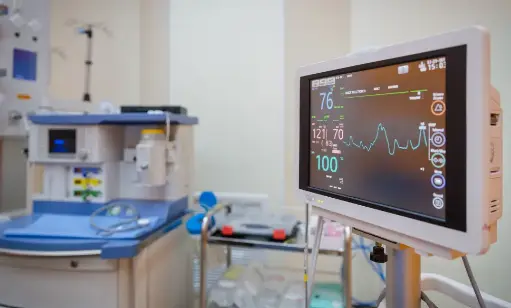
Module overview
Vital signs are the most basic — and most powerful — data in nursing. Measured accurately and interpreted in context, they reveal how a patient is doing and when something is changing. This module sharpens both the measuring and the thinking.
Learning outcomes
1 Explain why accurate vital signs and a baseline matter.
2 State the normal adult ranges and what each vital sign tells you.
3 Measure each vital sign accurately and avoid common errors.
4 Perform a structured baseline clinical assessment of the whole patient.
5 Interpret findings against trends and baseline, and act on abnormalities.
How this module works
Use Next or the chips above. The vital-signs interpreter is interactive — set values and see how each reads. Knowledge checks are for your learning and are not graded; your formal assessment (quiz + reflective practice) is separate.
A note on scope
Foundational education for internationally qualified nurses. Normal ranges are typical adult values for guidance — children, pregnancy and some conditions differ, and your facility's observation chart defines local thresholds. Always follow local policy and your scope of practice.

NCLEX-RN (NGN) Preparation Programme
Purpose
This programme prepares internationally qualified nurses to sit the NCLEX-RN multiple-choice examination as part of the NMBA Outcomes-Based Assessment pathway to registration in Australia. It covers the whole of the NCLEX-RN Test Plan, teaches the Next Generation item types and the clinical judgment model they are built on, and bridges Australian clinical terminology to the wording candidates will meet on the examination.
Who it is for
- Internationally qualified registered nurses streamed to the Outcomes-Based Assessment
- Candidates repeating the examination after an unsuccessful attempt
- Australian-educated nurses seeking NCLEX-RN registration for practice overseas
- Educators delivering NCLEX preparation under an OBA partnership arrangement
At a glance
| Modules | 19 clinical and professional modules, plus orientation |
| Lectures | 65 video lectures with slide decks, workbooks and item sets |
| Contact time | 43.5 hours of lecture content, before facilitated review |
| Practice items | 390 teaching items with full rationales, mapped to client need and clinical judgment step |
| Assessment | Module item sets, two progress examinations, one full mock examination |
| Duration | 4, 8, 12 or 16-week schedules available |
| Delivery | Self-paced video with facilitated review sessions, or fully facilitated classroom delivery |
| Language | Australian English throughout, with a terminology bridge to NCLEX wording in every lecture |
How it is built
Modules are numbered by content area but taught in a sequence set by dependency and examination weighting. Foundations come first - exam mechanics, safety, management of care, laboratory values and calculation - because every other module rests on them. Pharmacology is taught as a block and then revisited daily for the remainder of the programme, because pharmacology decays quickly and does not hold to test day if studied once. Body systems follow, then the specialty content candidates most often under-prepare mental health, paediatrics, maternity and health promotion. Clinical skills and consolidation close the programme.
Practice items are distributed to match the published Test Plan bands rather than spread evenly, so study effort concentrates where the examination concentrates.
What accompanies every lecture
A slide deck, a facilitator guide, a student workbook with study notes and case work, a cold item set with full rationales, a terminology bridge from Australian usage to NCLEX wording, and one NGN item type modelled through an unfolding case.
Assessment and readiness
Lecture item sets are diagnostic and carry no pass mark. Module quizzes are timed and set at 65% on a cold first attempt. Progress Examination 1 covers Modules 00–09 and Progress Examination 2 covers Modules 10–19, each 75 items, timed and Test Plan weighted, requiring 65% overall with no client need category below 60%. The mock examination is 85 items in a single uninterrupted sitting.
A test date is recommended only once every module quiz is cleared cold, both progress examinations are cleared with no category below 60%, one mock is completed without pausing, and the candidate's item log shows a shift away from knowledge-gap errors toward isolated reading errors.
Learning outcomes
On completion, candidates can:
- Explain how computer adaptive testing determines the result, and interpret the pass standard correctly
- Identify each Next Generation item type on sight and apply the correct answering strategy
- Apply the six steps of the NCSBN Clinical Judgment Measurement Model to an unfolding clinical case
- Apply a defensible priority framework to select the first nursing action in any clinical situation
- Demonstrate safe medication practice, including calculation, high-alert medications and toxicity recognition
- Recognise clinical deterioration early and escalate using a structured communication tool
- Apply the legal, ethical and professional principles governing delegation, consent, documentation and advocacy
- Translate Australian clinical terminology, units and drug names into the wording used on the examination
- Deliver safe, culturally responsive care across the lifespan, including mental health, paediatric and maternity content
- Use progress-exam and item-log data to construct and act on an individual remediation plan
Regulatory currency statement. NCSBN revises the NCLEX-RN Test Plan on a triennial cycle, and the passing standard, item counts, appointment length and fees are set by NCSBN and Pearson VUE. NMBA and AHPRA set the Internationally Qualified Nurse and Midwife pathway, its streaming rules, fees and validity periods. Every figure of this kind must be verified against the source document in force at the candidate's test date before it is quoted to a candidate. OBA educators do not advise on individual streaming, visa or eligibility decisions.
OBA Nursing Academy is an education-only provider. We do not guarantee exam results, registration, employment, migration or visa outcomes.
OBA Nursing Academy · ABN 38 015 879 575 · Currumbin QLD · obana.com.au

Palliative and End-of-Life Care
A fully self-directed, entirely online professional development programme for nurses, care workers, student nurses and family carers. 10 CPD hours.
|
Course code |
OBA-PEOL-2026 |
|
Provider |
OBA Nursing Academy |
|
Duration |
10 CPD hours, self-paced |
|
Delivery |
Entirely online, self-directed, through the OBA learning management system |
|
Modules |
11, plus a case study assessment and a summative assessment |
|
Assessment |
60 single-best-answer items, 80% pass mark, 2 attempts |
|
Entry requirements |
None. Content is written for a mixed audience and identifies which sections apply to each role |
|
Outcome |
Certificate of completion with a unique certificate identifier |
|
Version |
1.0, issued 18/09/2026, review due 18/09/2027 |
Who should enrol
· Registered nurses (RNs) and enrolled nurses (ENs) in acute, aged, disability and community settings
· Internationally qualified nurses preparing for Australian practice
· Assistants in nursing, personal care workers and disability support workers
· Student nurses and student enrolled nurses
· Family members and informal carers supporting someone who is dying at home
What you will cover
|
Module |
Title |
Hours |
|
00 |
Orientation: How This Course Works |
0.5 |
|
01 |
The Palliative Approach: What It Is and When It Starts |
0.8 |
|
02 |
Advance Care Planning, Substitute Decision-Making and Goals of Care |
1.0 |
|
03 |
Communication: Difficult Conversations and Family Meetings |
1.0 |
|
04 |
Assessing and Managing Pain |
1.0 |
|
05 |
Managing Other Common Symptoms |
1.0 |
|
06 |
The Last Days of Life: Recognising Dying and Terminal Care |
1.2 |
|
07 |
Medicines at the End of Life and the Subcutaneous Route |
1.0 |
|
08 |
Culturally Safe and Spiritually Responsive Care |
0.8 |
|
09 |
Care After Death and Supporting the Bereaved |
0.8 |
|
10 |
Scope, Law, Ethics and Caring for Yourself |
1.0 |
How you will learn
1. Watch the narrated module video.
2. Read the Student Learner Guide for that module.
3. Complete the reflective workbook activity.
4. Complete the knowledge check and read the rationales.
5. Move to the next module when the system unlocks it.
What this course is, and is not
|
SCOPE OF PRACTICE AND CURRENCY • This programme is professional development. It is not a qualification, it is not a unit of competency from a training package, and it does not of itself authorise any learner to perform any clinical activity. Palliative care is performed only within the learner's own scope of practice, after assessment of competence, and in line with the policy of the organisation the learner works for. This course names no medicine doses. Every medicine, dose, route and interval must be checked against the current prescription, Therapeutic Guidelines and local policy before it is given to a person. • Regulatory and legal currency: this content was written against the NMBA standards, the ACSQHC National Consensus Statement on end-of-life care, the National Palliative Care Standards, the NSQHS Standards (2nd edition) and the strengthened Aged Care Quality Standards as published at 18/09/2026. Law relating to advance care planning, substitute decision-making, verification of death and voluntary assisted dying differs in every Australian state and territory and changes frequently. This course teaches the questions to ask, not the answer for your jurisdiction. Always confirm the current position with your own state or territory legislation and your organisation's policy. |